English| EUR
Suggested for you
More currencies
Choose a language
Camel saddles sit high, ride hot, and demand friction-resistant fabrics across routes spanning the Erg Chebbi dunes to palm-shaded Marrakech outskirts. The right combination protects against UV exposure that reaches 11+ in summer, chafing from wooden saddle frames, and temperature swings of 20°C between dawn and midday. This guide covers the clothing layers that function in desert conditions without prescribing a fixed uniform.
Quick answer
Lightweight, loose-fitting layers in breathable natural fibers form the foundation for what to wear on a camel ride in morocco: long sleeves and long pants shield skin from UV and saddle friction, while a wide-brimmed hat and sunglasses block overhead sun. Closed-toe shoes with grip prevent sand entry and foot slippage on stirrups. A scarf or shemagh wraps around the neck and face when wind lifts sand. Avoid synthetic athletic wear that traps heat and skip open-toed sandals that expose feet to hot leather straps.
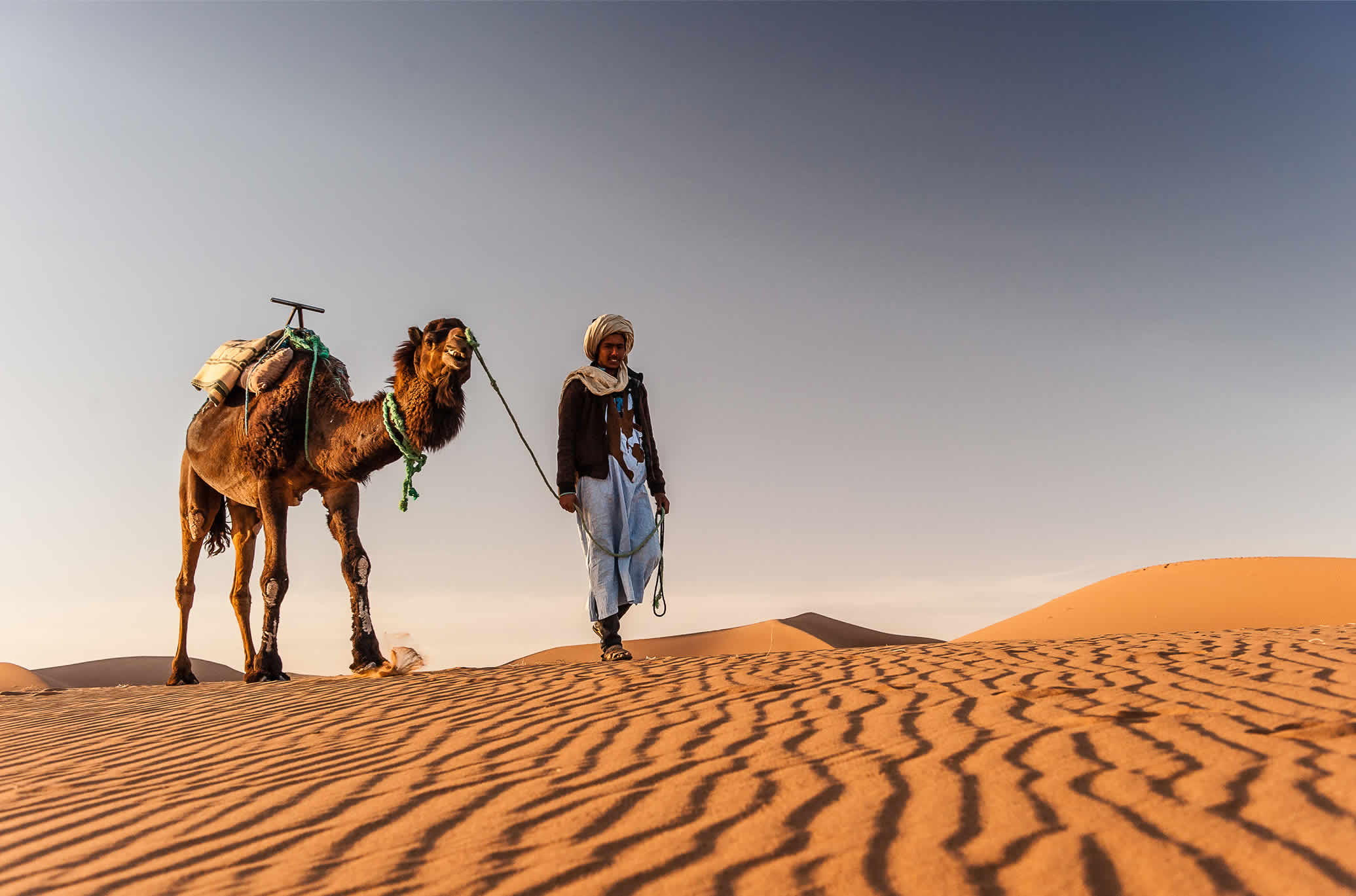
Camel saddles in Morocco rest on wooden frames draped with wool blankets, and the rider sits atop a structure that rocks laterally with each stride rather than cushioning like a horse saddle. The inner thighs and lower back bear continuous contact with rough textile and wood edges during treks that range from 40-minute tourist loops to multi-day Sahara crossings. Fabric choice determines whether that contact causes chafing by the second hour. Cotton and linen breathe in dry heat and wick moisture without clinging. Long sleeves guard forearms from UV radiation that intensifies in the Sahara, where cloud cover rarely interrupts direct exposure between 06:00 and 18:00. Long pants create a friction buffer between skin and saddle blanket, especially when the camel stands or kneels abruptly. Loose fits allow air circulation and prevent binding at the knee during the bent-leg posture required in the saddle. Denim and heavy canvas trap heat and stiffen with sweat; reserve those for evening stops. Footwear must protect the top of the foot and grip the stirrup bar. Leather or canvas sneakers with closed lacing work across terrain types. Sandals expose toes to the hot metal stirrup and let sand infiltrate, leading to blisters within minutes of entering dune fields. Hiking boots provide ankle support but heat up quickly; low-cut trail shoes offer a middle path. The sole should flex enough to feel the stirrup without being so thin that the bar bruises the arch. A wide-brimmed hat shades the face and neck better than a baseball cap, which leaves ears and nape exposed. Sunglasses with UV 400 rating and wraparound coverage block glare reflected off pale sand. A lightweight scarf serves multiple roles: neck sun barrier, dust mask when wind picks up, and head wrap if the hat blows off. Cotton scarves absorb sweat; polyester blends dry faster after washing at desert camps. Layering a long-sleeve shirt over a breathable undershirt lets riders adjust to temperature shifts without removing the outer UV shield. Understanding what to wear on a camel ride in morocco means prioritizing function over fashion and natural fibers over synthetics. The clothing combination that works balances ventilation with coverage, friction resistance with flexibility, and packability with durability across desert microclimates.
“Fabric choice determines whether saddle contact causes chafing by the second hour.”
The best arrival window is 06:00–18:00 to avoid extreme midday heat and ensure favorable lighting for desert conditions. Layering is essential due to significant temperature swings between dawn, midday, and dusk.
Mild days, cool evenings
Ideal for daytime rides with light layers.
High heat, exceeding 40°C
Requires early morning departures and sun protection.
Warm days, cooling nights
Optimal for comfortable trekking and layered clothing.
Cold nights, mild days
Necessary to wear heavy layers or jackets for early starts.
Verdict: The best arrival window is 06:00–18:00 during the shoulder seasons of April or October for the most temperate desert conditions.
Morocco is a conservative Muslim country where modest dress demonstrates respect for local customs. Clothing choices affect both cultural reception and practical comfort during camel handling.
Pack strategically for desert conditions and saddle comfort during your camel trek.
There is no official entrance fee for accessing the desert regions where camel rides take place. Costs are determined entirely by private operators providing the service.
Verdict: Adults pay zero for access, but must negotiate or book directly with private operators for camel riding services.
Everything you need to know about what to wear on a camel ride in morocco
For maximum comfort, choose loose-fitting, breathable fabrics like linen or light cotton that protect your skin from the sun. Knowing what to wear on a camel ride in Morocco involves layering to manage shifting desert temperatures throughout the day.
Yes, long pants are highly recommended to prevent chafing against the saddle and to protect your legs from the coarse hair of the dromedary. This is a practical tip for anyone researching what to wear on a camel ride in Morocco before they travel.
Opt for closed-toe shoes or sturdy sandals with straps to ensure your feet stay secure while mounting and dismounting. Avoiding loose flip-flops prevents them from falling off during the rhythmic movement of the animal.
While tourist areas are generally relaxed, dressing modestly by covering your shoulders and knees is appreciated across many regions of the country. Respectful attire helps you integrate better into local customs while enjoying your desert experience.
A wide-brimmed hat is essential to provide shade for your face and neck against the intense UV rays. Sunglasses are also recommended to protect your eyes from fine sand particles kicked up by the wind.
The best arrival window is between 06:00 and 18:00, which helps you avoid extreme midday heat. Plan your desert transit accordingly to ensure you arrive during these optimal lighting and temperature hours.
Camel Ride Prices in Morocco
Read more GuideEthical Camel Riding in Morocco
Read more GuideWhere to Ride Camels in Morocco
Read more Tickets & toursCamel Rides in Fes
Read more Tickets & toursCamel Rides in Marrakech
Read more Tickets & toursSahara Desert Camel Treks
Read more Tickets & toursCamel Rides in Agadir
Read more GuideCamel Riding in Morocco: Planning Guide
Read more