English| EUR
Suggested for you
More currencies
Choose a language
Ask ten handlers in Merzouga about rider weight and you will hear ten answers, because nobody in Morocco publishes an official one for the animals locals call jmel. This camel ride Morocco weight limit guide explains what stables in the Sahara, the Palmeraie and Agafay actually assess — the dromedary, the Berber saddle, the length of the route. It also shows how to settle the question before you reach the trailhead.
Quick answer
Morocco enforces no national camel ride Morocco weight limit — each operator sets its own cap, judged on the dromedary's age, build and route length, and confirmed when you book. Access to the riding areas themselves is free, 0 MAD, with sites running 07:00–19:00 daily. Heavier or taller riders should state their weight in advance rather than at the saddle.
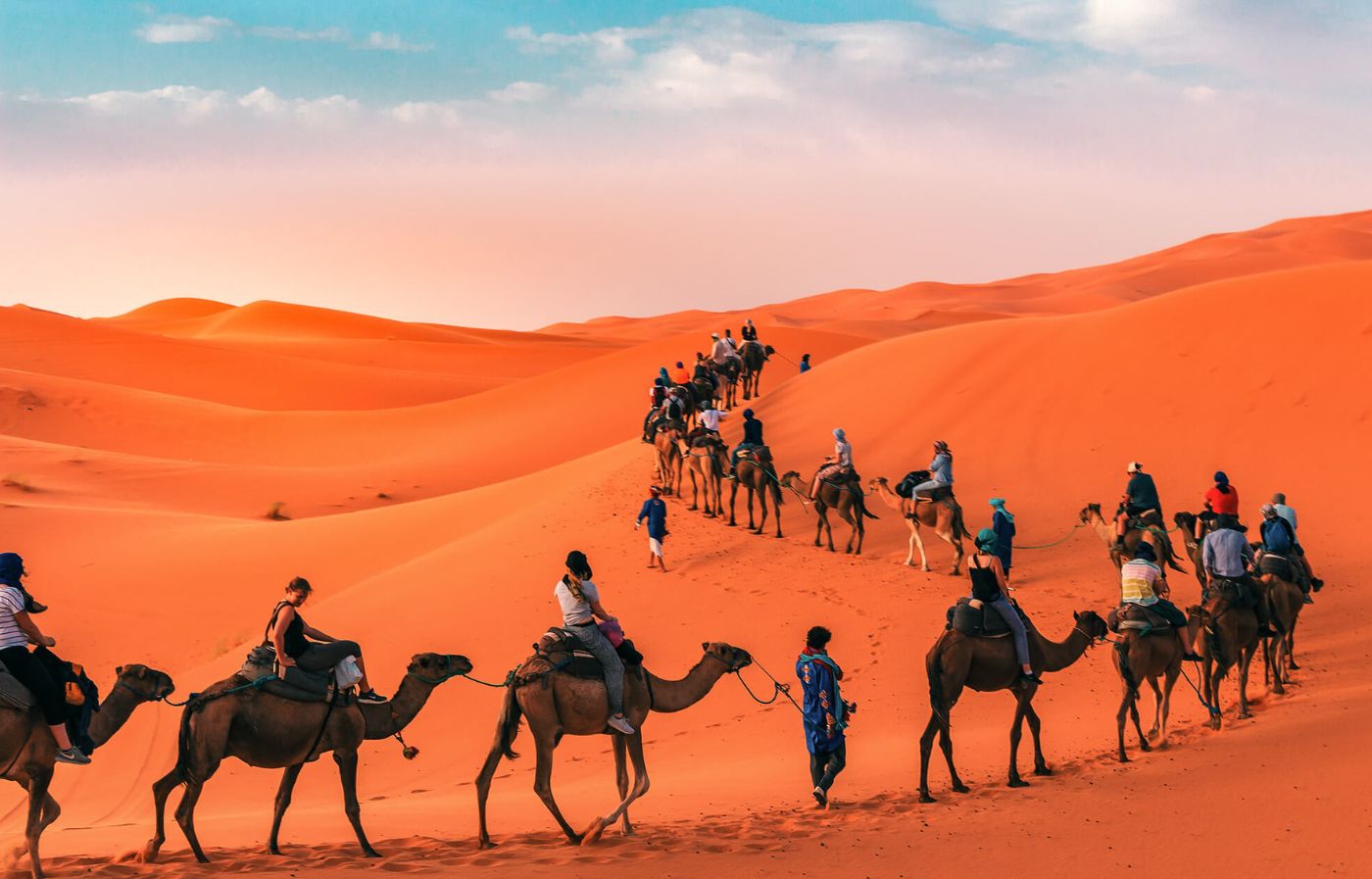
Morocco's dromedaries come from a working lineage. Before tourism, the same breed hauled trade loads across the Sahara for weeks at a stretch, and a pack animal in good condition was expected to shoulder a substantial share of its own body mass. That history is why no single camel ride Morocco weight limit exists on paper. Capacity was always a judgement made animal by animal, by the person who fed it, and in 2026 that judgement still sits with the cameleer holding the halter rather than with any ministry register. What the handler weighs up is rarely just the number on a scale. A dromedary carries load across the broad ribs behind the hump, where a wooden-framed Berber saddle spreads pressure over blankets; a badly balanced rider does more harm than a heavier, steadier one. Age matters, as does season and the ground underfoot. The soft sand of Erg Chebbi outside Merzouga asks different work from the stony plateau of Agafay or the flat palm tracks of the Palmeraie near Marrakech, and a trek across dunes at sunset is not the same job as a twenty-minute loop. Reputable stables rotate their animals and keep rides short in heat. Those are the signals worth reading when comparing a Sahara camel trekking operator against a roadside outfit. Practically, the answer is a phone call or a booking note, not a published figure. Travellers carrying more weight, or standing well over average height, should declare it when they reserve; good operators will assign a stronger animal, shorten the route, or suggest a cart or 4x4 alternative without making a scene of it. Two people should never share one saddle. Luggage, camera bags and water add up and are usually better left with the guide. Autumn into winter is the kinder season for both rider and animal, with cooler mornings across the south from October onward. Anyone researching a camel ride Morocco weight limit before a desert trip is already asking the right question, because it leads straight to the questions that matter more: how many hours the animals work, how they are tacked, and who checks them. The dedicated sections on this page set out the figures operators quote, the welfare checks to run on arrival, and what a dromedary excursion typically costs.
“Capacity was always a judgement made animal by animal, by the person who fed it.”
Camel ride weight limits in Morocco are determined by the physical capabilities of Dromedary camels and standard tour operator safety policies. Understanding these constraints ensures both passenger comfort and the well-being of the animals.
Most Moroccan tour operators set a maximum weight limit of 100 to 110 kilograms per rider. This restriction protects the camel's spine and joints from excessive strain during treks.
A Dromedary camel can carry up to 20 percent of its body weight comfortably. While they are powerful animals, their physiology is best suited for endurance rather than bearing heavy, concentrated loads.
Proper weight distribution is essential for camel balance when navigating desert dunes. Riders are often asked to sit centered to prevent the animal from tiring prematurely or losing stability on steep inclines.
Dromedary camels, the single-humped species used in Morocco, are specifically adapted to hot, sandy terrain. Their anatomy is built for desert survival, which influences their load-bearing capacity compared to double-humped Bactrian camels.
Many local guides reserve the right to assess weight and height combinations individually. Operators prioritize safety, and excessive weight can lead to refusal of service to ensure animal health.
Guests approaching the weight limit should inform their operator during the booking process. Providing accurate information allows guides to select the strongest animals in the herd for the excursion.
A camel's wellbeing depends on how riders and operators behave around it, and rider weight is only one part of that picture. Reading the animal's condition and the handler's habits tells you most of what you need to know.
There is no cost to access the public desert areas where camel rides take place, as admission fees are 0 MAD. Actual costs are determined by private operator tour packages.
Verdict: Adults pay 0 MAD for entry, though private tour package prices fluctuate based on the specific services and route selected.
The best arrival window is 07:00–10:00 to avoid the intense midday heat and peak sun exposure. Scheduling rides during these cooler hours protects both riders and camels from heat stress.
Mild temperatures, 20°C–25°C
Ideal conditions for long rides before temperatures rise.
Pleasant temperatures, 22°C–28°C
Stable weather provides comfortable camel trekking experiences.
—
Arriving at 07:00 ensures a cooler environment and less congestion.
Verdict: The best time to visit is during the spring or autumn months, specifically arriving between 07:00 and 10:00 to manage heat exposure effectively.
Camel riding operations are available daily throughout the week in various Moroccan locations. These hours apply to standard visitor inquiries and scheduling planning.
Everything you need to know about camel ride morocco weight limit
Most operators enforce a standard camel ride Morocco weight limit of approximately 90 to 100 kilograms to ensure animal health and rider safety. It is essential to confirm specific restrictions with your tour provider before booking your desert excursion.
If you exceed the specified camel ride Morocco weight limit, most ethical operators will advise against riding to prevent physical distress to the dromedary. In such cases, they may offer alternative transport options like walking alongside the caravan or using a 4x4 vehicle.
While the physical structure of dromedaries is consistent across Morocco, local handlers may adjust their camel ride Morocco weight limit policies based on the size and age of individual animals. Always inquire directly with your guide in locations like Merzouga or the Palmeraie to get the most accurate information.
To maintain a safe camel trekking tour, handlers carefully assess the distribution of weight on the saddle and monitor the gait of the animal throughout the journey. Ensuring compliance with the camel ride Morocco weight limit helps prevent spinal strain and exhaustion for the animals.
Children are generally welcome to participate, though they may be required to ride with an adult or follow specific safety protocols depending on their size. Safety remains the priority, so please check if any age or size-based restrictions apply alongside the primary weight guidelines.
When planning your desert trip, look for operators who prioritize the health and proper hydration of their livestock. Supporting responsible tourism ensures that these cultural experiences remain sustainable and humane for the animals involved.
Access to public dunes and desert areas is generally free, but you will need to pay for private operator tour packages if you wish to hire a guide or camel. Fees for these services are determined by independent providers and are not part of the public access requirements.
Camel Ride Prices in Morocco
Read more GuideWhat to Wear on a Camel Ride in Morocco
Read more GuideEthical Camel Riding in Morocco
Read more GuideWhere to Ride Camels in Morocco
Read more Tickets & toursCamel Rides in Fes
Read more Tickets & toursCamel Rides in Marrakech
Read more Tickets & toursSahara Desert Camel Treks
Read more Tickets & toursCamel Rides in Agadir
Read more