72 hr
3-Day Sahara Desert & Atlas Mountains Adventure
Journey through mountain passes, ancient kasbahs, and golden dunes with camel treks and desert camping
Reserve
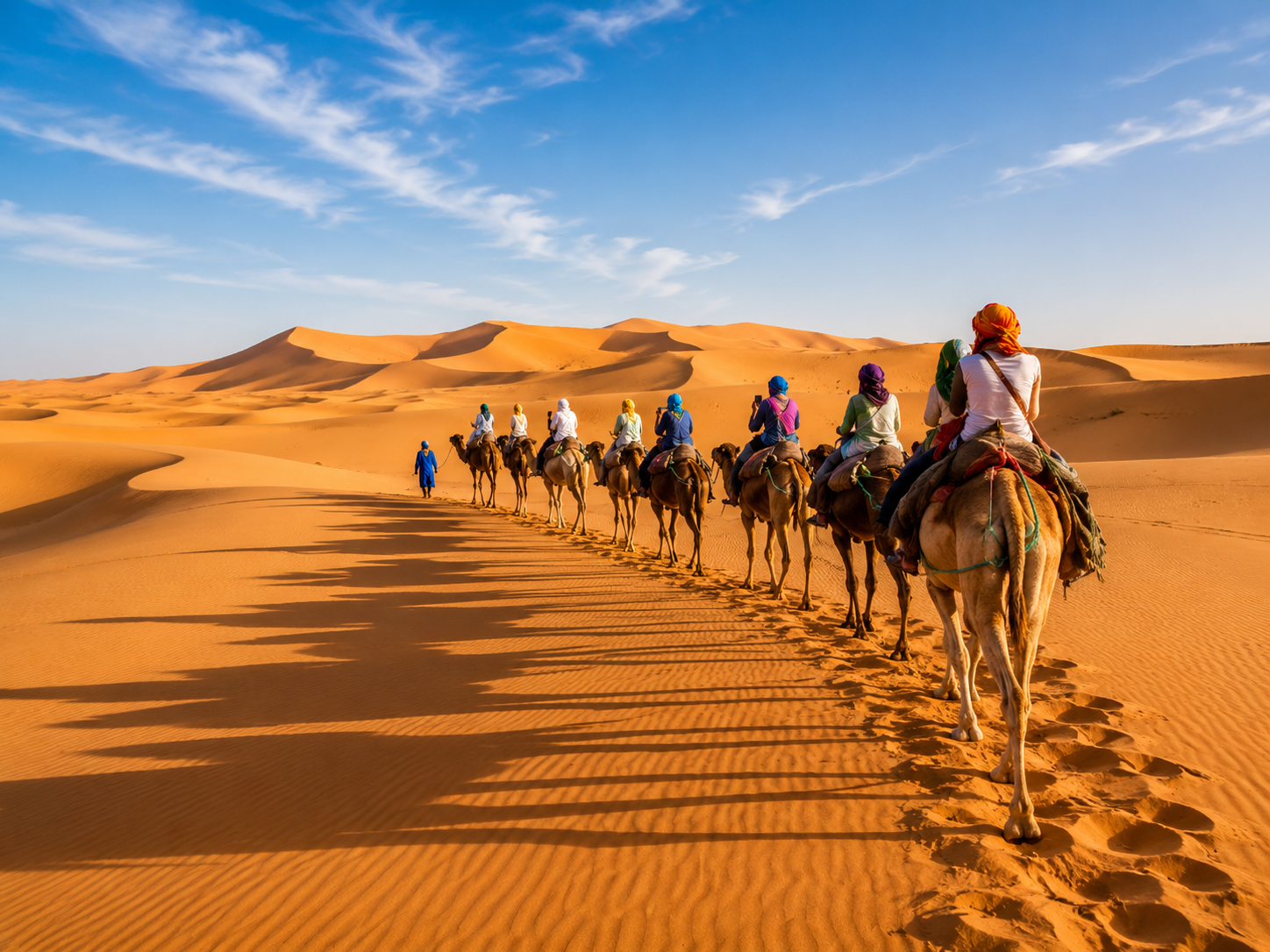
Cross the Erg Chebbi dunes at sunset, sleep under Saharan stars.
Hand-picked by our editors — only the best 5 experiences from 47 reviewed.
Verified partners for every tour, free cancellation where available, and instant confirmation on every booking.
72 hr
Journey through mountain passes, ancient kasbahs, and golden dunes with camel treks and desert camping
Reserve
72 hr
Journey across the Atlas Mountains to the Sahara dunes with camel treks, Berber camps, and UNESCO sites
Reserve
72 hr
Cross the Atlas Mountains to Erg Chebbi for camel treks, a desert camp, and sunrise over the dunes.
ReservePrices from verified partners. Availability updates in real time at checkout. Free cancellation policies apply where shown.
The landmarks, rooms, and views travelers on this tour remember — all visible on a single visit.
Towering sand dunes reaching 150 meters high, perfect for sunset photography.
They complement each other; most visitors who do both find that the 4x4 provides more excitement while the camel ride morocco sahara desert offers deeper connection to the dunes. Exploring the landscape via these distinct camel ride morocco sahara desert tours allows for a balance of traditional rhythm and modern exploration.
| Feature | Top pick Camel Trekking | 4x4 Off-Road Tour |
|---|---|---|
Pace |
Slow and rhythmic | Fast and agile |
Immersion |
High sensory engagement | Limited cabin isolation |
Terrain Access |
Dune crests only | Extensive desert coverage |
Physical Effort |
Requires moderate balance | Minimal seated effort |
Duration |
1.5–3 hours | 2–4 hours |
Primary Experience |
Traditional nomad transport | High-speed dune bashing |
| See tickets → |
Verdict: Opt for the camel ride morocco sahara desert tickets if you prioritize stillness, or choose the 4x4 if you wish to see more of the Erg Chebbi desert expanse.
Choose your ticket, select your date, and reserve in under two minutes. Secure checkout handled by our verified partner.
Instant confirmation by email, with a mobile voucher you can save offline. No printing, no queuing at a collection desk.
Arrive at the entrance, show your voucher on your phone, and walk in. Most tickets include priority or skip-the-line access.
Practical details for your visit straight from our verified partners — hours, access, rules, and how to get there.
Wear loose-fitting, breathable long-sleeved shirts and trousers to protect against sun and sand. A scarf or shemagh is highly recommended for wind protection.
Leave main luggage at your hotel or auberge in Merzouga, as these are typically locked securely. Carry only a small daypack with essentials on your camel ride morocco sahara desert journey.
Protect camera equipment from fine sand by using sealed pouches. Dust and grit can easily damage lenses and electronic ports during any camel ride morocco sahara desert experience.
Trekking in the dunes requires a moderate fitness level for mounting and dismounting camels. Consult with your local guide regarding specific mobility requirements before booking.
Family-friendly camel ride morocco sahara desert tours are widely available. Ensure children are comfortable with animal interaction and the desert environment before departing.
Most overnight desert camps include traditional Moroccan dinner and breakfast. Bottled water is provided, but carrying an extra supply is advisable for longer treks.
Best time to go, insider tips, nearby landmarks, and the cancellation fine print — flip through to skim what matters to you.
Flexible, no hidden fees.
As private operators manage individual treks, cancellation windows vary. Contact your specific provider to verify refund eligibility for your camel ride morocco sahara desert tour.
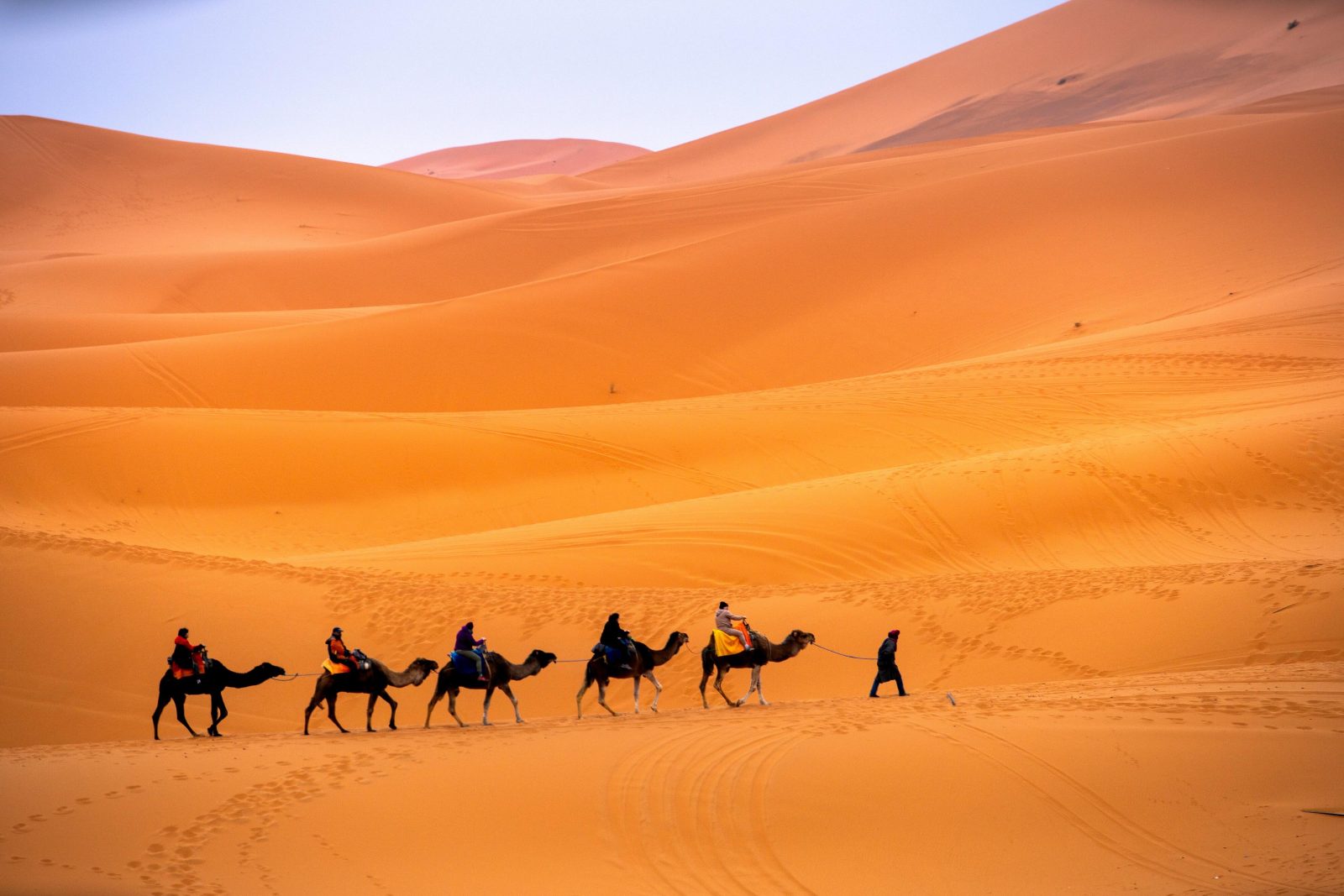
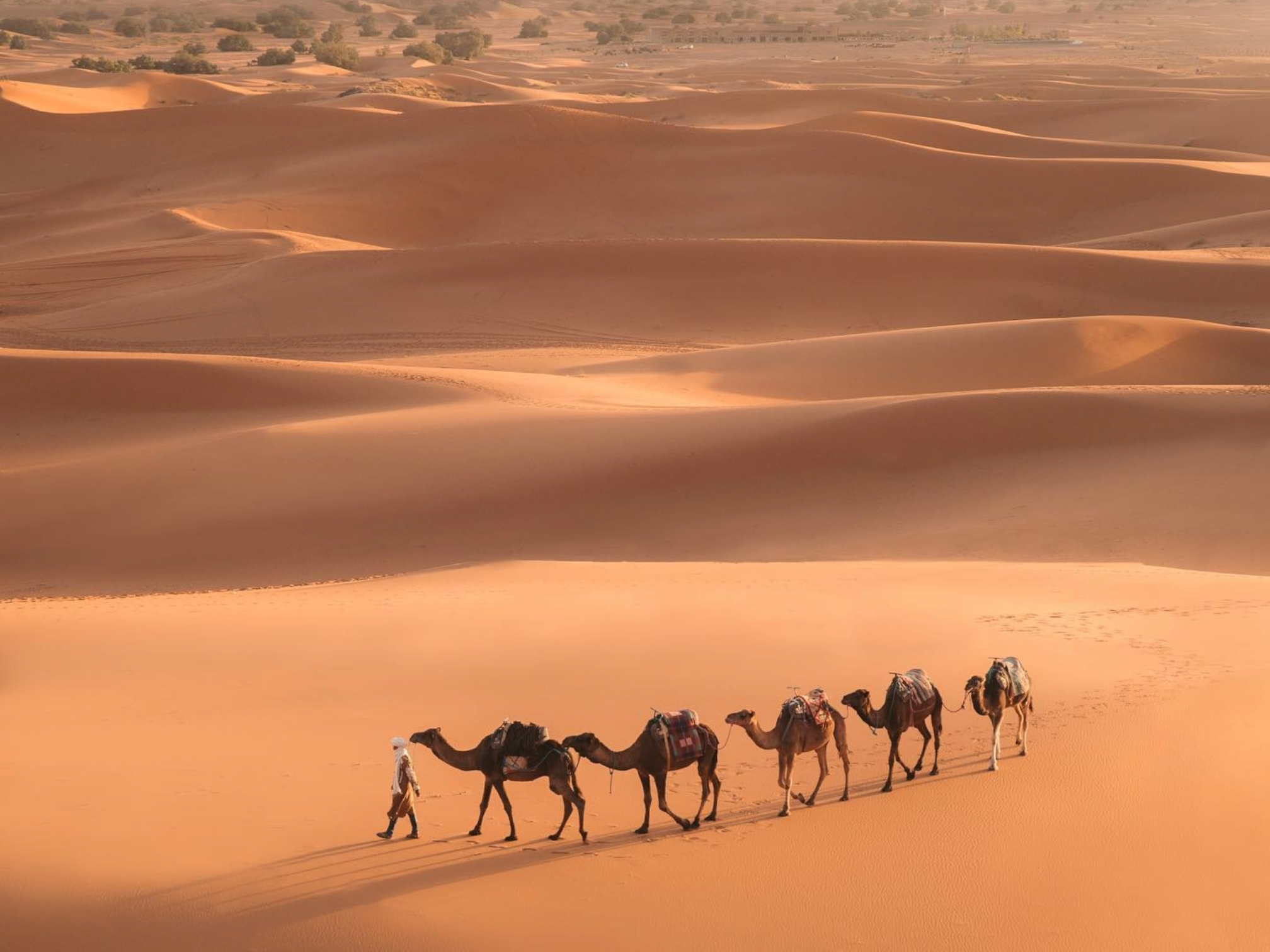
Morocco's Erg Chebbi dune field rises 150 metres above the Sahara floor in a wall of sculpted sand that shifts colour from amber to deep ochre as the sun arcs across the eastern horizon. The dunes anchor the village of Merzouga, a settlement that grew from a caravan halt on the ancient salt route linking Timbuktu to the Atlas foothills. Berber families who once guided trans-Saharan merchants now lead camel ride morocco sahara desert tours, maintaining ancestral knowledge of water sources, seasonal wind patterns, and safe passage through terrain that can disorient even experienced travellers. The dromedary remains the most practical means of crossing soft sand that swallows vehicle tyres and foot traffic alike. A single-humped camel distributes weight across wide, padded hooves, allowing smooth traversal of slopes that exceed forty degrees in places. Traditional méharée expeditions departed at dawn to avoid midday heat; contemporary treks reverse that schedule, staging departures in late afternoon so riders witness the dunes' colour transformation during the two-hour descent of the sun. The Erg Chebbi massif extends roughly 22 kilometres north to south and five kilometres at its widest point, forming a natural amphitheatre for light and shadow play that has drawn photographers since the 1960s. Overnight camps cluster in inter-dune valleys where Tamarix shrubs trap moisture and provide windbreaks. Nomadic Berber tents—low-slung structures of woven goat hair stretched over wooden frames—serve as communal dining spaces after sunset. Guides prepare tagines in buried clay pots, the steam mingling with smoke from acacia-wood fires. Stars appear with unusual clarity here; the absence of ambient light and low atmospheric moisture yield visibility conditions that reveal the Milky Way's structure without magnification. Multi-day camel ride morocco sahara desert tours extend westward into the Draa Valley or south toward Alnif, tracing routes that pass fossil beds, dry riverbeds called wadis, and occasional nomad encampments where herders still move flocks according to rainfall patterns tracked over generations. The desert ecosystem supports desert hedgehogs, fennec foxes, and the endangered Dorcas gazelle, species adapted to temperature swings that can span 30 degrees Celsius between noon and midnight. Merzouga itself functions as the logistical gateway, a cluster of guesthouses and outfitters positioned where asphalt ends and sand begins. The village's economy pivoted entirely toward tourism after a 2006 flash flood demonstrated the region's climatic volatility. Modern treks balance traditional transport methods with safety protocols: satellite phones, first-aid certification for guides, and GPS tracking for groups venturing beyond the main dune corridor.
"The Erg Chebbi massif extends roughly 22 kilometres north to south, forming a natural amphitheatre for light and shadow play."
A step-by-step walkthrough of the visit — what you'll see, how long each stage takes, and the details that matter.
You arrive in Merzouga as afternoon heat begins to soften, the village quiet except for the rustle of date palms and the low calls of camels kneeling in the sand. Your guide adjusts stirrups on a wooden saddle draped with Berber textiles, then signals the dromedary to rise—a lurching forward-and-back motion that requires you to lean into the rhythm. The camel's gait is a slow, rolling walk, each step sinking slightly before finding purchase. The trail climbs the first dune ridge within twenty minutes, the gradient steep enough that you grip the saddle's pommel and trust the animal's balance. At the crest, the landscape opens: a sea of ridges rolling toward a horizon line blurred by heat shimmer. Your guide points out a falcon circling thermal currents above a distant wadi. You descend into shadow as the sun drops, the sand cooling rapidly underfoot when you dismount to walk the final approach to camp. Tents glow orange from interior lanterns by the time you arrive. You sit on low cushions while the tagine simmers, the scent of cumin and preserved lemon mixing with woodsmoke. After the meal, the guide tunes a gimbri—a three-stringed lute—and begins a call-and-response chant in Tamazight. You step outside later to find the Milky Way stretched overhead, so dense with stars that familiar constellations disappear into the noise. The silence is complete except for the occasional crackle of embers and the soft shuffle of camels settling for the night.
The desert is accessible 00:00–23:59, but individual treks are arranged by private operators. We recommend planning your arrival between 05:00 and 19:00 for the best lighting.
You can book activities through private operators; there is 0 EUR entrance fee to the dunes themselves.
Sunrise or sunset hours provide the best lighting and most comfortable temperatures for any camel ride morocco sahara desert outing.
Operators generally accommodate various ages, but inquire directly regarding safety protocols for your specific camel ride morocco sahara desert trip.
Wear loose, breathable long-sleeve clothing and closed-toe shoes to ensure a comfortable camel ride morocco sahara desert experience.
Yes, most overnight camping options include traditional dinner and breakfast for your camel ride morocco sahara desert stay.
While operators provide water, it is standard practice to carry a personal supply for your camel ride morocco sahara desert trek.
Meeting points are typically at local hotels or auberges on the edge of Erg Chebbi, the main Sahara Desert access point.
Cancellation policies are determined by private operators; please check your specific booking details for your camel ride morocco sahara desert tour.