English| EUR
Suggested for you
More currencies
Choose a language
Morocco's camel trails run from the Palmeraie date groves outside Marrakech to the Erg Chebbi dunes at Merzouga, and the distance between a careful operator and a roadside photo stop is wide. This camel ride morocco ethical briefing sets out what the access rules actually are and where the real variables sit. It covers the figure that matters, the timing that matters, and what to ask a cameleer before stepping into the saddle.
Quick answer
Access costs nothing: the entrance fee is 0 EUR, free entry, because camel rides are private tours offered by various local operators, and the sites themselves are open 00:00–23:59 every day. The ethical variable is the operator, not the ticket. Aim for the 06:00–18:00 arrival window, which avoids midday heat and protects the animals.
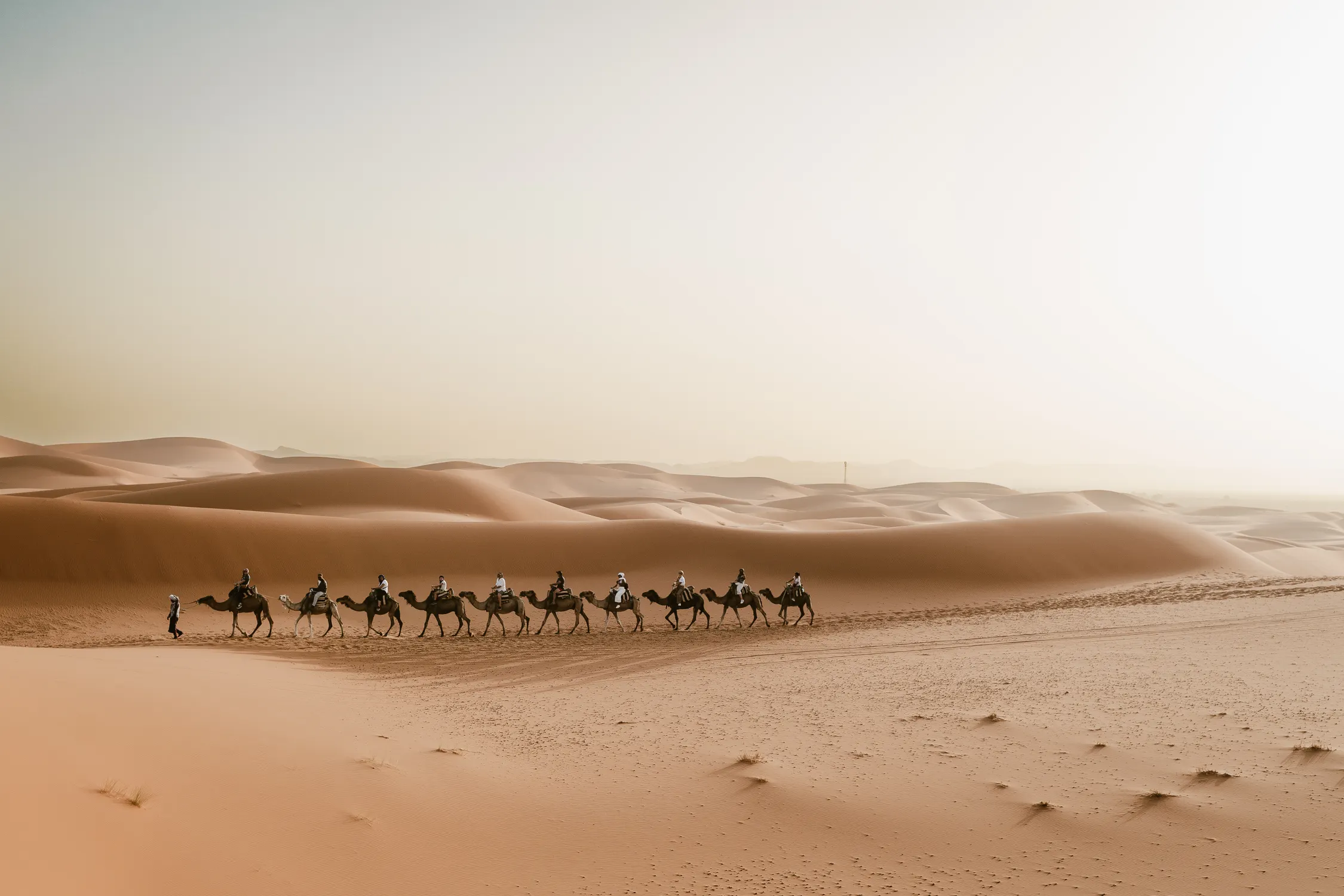
The dromedary is not a native Moroccan animal. One-humped camels came west from Arabia with trans-Saharan trade more than a thousand years ago, and the herds working the dunes today descend from stock bred for salt and textile caravans rather than for tourism. That history explains the current confusion. A camel ride morocco ethical question is really a question about labour: who owns the animal, who leads it, and how many hours it works between rests. Nothing about the landscape answers that. The visitor has to read the operator instead. Morocco's camel sector splits into two broad models. Along the Palmeraie road outside Marrakech and at the edge of the Agafay stone desert, short rides are sold by intermediaries who may not own the animals, and the cameleer is often a subcontracted day worker. In Merzouga, at the foot of Erg Chebbi, many treks run through family outfits and village cooperatives where the same Amazigh handler works the same small string of dromedaries season after season. Length matters as much as location. A fifteen-minute circuit near a car park and an overnight trek to a desert bivouac place entirely different demands on an animal, and the second is usually the better-supervised product. Licensed guides carry a national card; unlicensed touts do not. Local signage still calls the longer version a méharée, a word worth searching when comparing Moroccan desert landmarks and the outfits that cross them. Verification is mostly clerical. Operator pages that name the handler, state the group size, and publish a route rather than a vague desert experience are easier to check than listings showing only a sunset photograph. Visitors can ask how many riders share each animal, how long the string works per day, and whether a vehicle follows the longer routes. A Sahara camel trek from Merzouga and a short Agafay circuit are staffed differently, and the operator should be able to explain why without hesitation. Answers to those questions do more than settle a camel ride morocco ethical choice; they usually predict the quality of the whole day, from the mint tea waiting at the bivouac to whether the guide knows which kasbah sits on the ridge. The site's booking pages list the departures that publish those details, which keeps the comparison practical rather than theoretical.
“A camel ride is only as ethical as the operator leading it, not the dune it crosses.”
Ethical camel riding depends on operator standards and your behavior. Observing animal condition and choosing responsible guides protects welfare while supporting communities that treat camels with care.
Local operators providing camel rides in Morocco typically maintain operations throughout the entire week. Choosing time slots that align with animal welfare practices is an essential part of planning your experience.
There is no entrance fee to access camel riding locations in Morocco. Costs are determined entirely by private tour arrangements with local operators.
Verdict: While entry is 0 EUR, travelers should prioritize operators with transparent pricing, as unusually low costs may reflect poor animal welfare standards.
Camel rides in Morocco are situated in diverse terrains including the Palmeraie and Agafay Desert near Marrakech, as well as the dunes of Merzouga. Accessing these areas typically requires private transport or organized tours from major city centers.
Travel from Marrakech city center to Palmeraie
Drive via N9 or R501 to Agafay Desert
Drive via N10 and N13 to Merzouga
Plan your travel to reach the site between 06:00–18:00 to avoid midday heat. Prioritize operators that prioritize animal welfare and maintain transparent logistics regarding camel care.
Everything you need to know about camel ride morocco ethical
Finding a camel ride morocco ethical requires evaluating how operators treat their animals and prioritize health over profit. Reputable providers maintain proper hydration, shade, and rest periods for their herds throughout the year.
Entrance fee is 0 EUR because camel rides are private tours offered by various local operators rather than public attractions. Prices vary depending on the duration and specific services included by the local guide.
The best arrival window is 06:00–18:00 to avoid midday heat and provide a more comfortable environment for the animals. Visiting during these hours ensures better lighting for photography while prioritizing animal welfare.
You can find experiences in various locations including Marrakech, such as the Palmeraie or Agafay Desert, and the dunes of Merzouga. Ensure the chosen provider demonstrates transparent practices when booking your camel ride morocco ethical adventure.
Children are generally welcome to participate in a responsible desert excursion if they are supervised and comfortable with large animals. It is important to confirm safety gear and animal handling policies with your local operator beforehand.
Look for companies that limit the number of hours animals work and provide evidence of regular veterinary care. A true camel ride morocco ethical choice favors operators who invest in the long-term well-being of their dromedaries.
The most common mistake is failing to observe the condition of the animals or their habitat before finalizing your booking. Take time to research the operator's reputation regarding animal care standards instead of choosing the cheapest option.
While Morocco does not have a single national certification for this, ethical tourism practices focus on sustainable interactions that do not exploit wildlife. Responsible operators emphasize education and respect for the natural environment during your desert journey.
Camel Ride Prices in Morocco
Read more GuideWhat to Wear on a Camel Ride in Morocco
Read more GuideWhere to Ride Camels in Morocco
Read more Tickets & toursCamel Rides in Fes
Read more Tickets & toursCamel Rides in Marrakech
Read more Tickets & toursSahara Desert Camel Treks
Read more Tickets & toursCamel Rides in Agadir
Read more GuideCamel Riding in Morocco: Planning Guide
Read more